Tuesday, April 23, 2013

Honor Aviatrix Bessie Coleman Speech by Opio Sokoni at Jacksonville, FL City Council Meeting


    _____________________________________________________


Below is the text of the speech given at the Jacksonville, Florida City Council's April 23, 2013 meeting. Opio Sokoni requested that the City commit to officially honoring Bessie Coleman who died in Jacksonville, Florida April 30, 1926. 


SPEECH TEXT:

              I come before you to respectfully request that we as a city properly honor aviatrix pioneer Bessie Coleman. The city of Jacksonville, Florida is the only town relevant to her storied life that has not formally recognized her memory with a street, building or other major city honor.


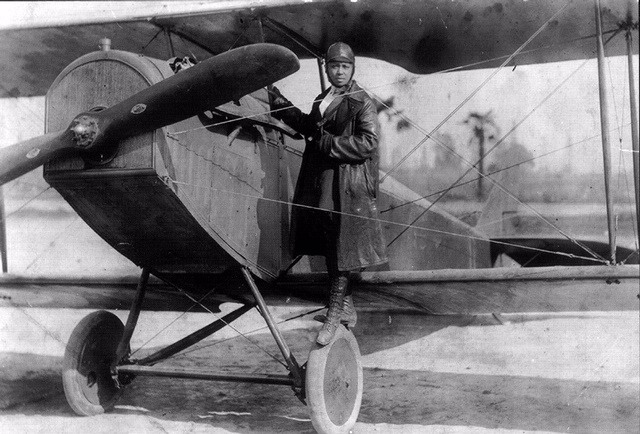
            Bessie Coleman earned an international pilot’s license from the most prestigious flight school in France. She was the first African American female to fly a plane. Bessie was immensely popular during the 1920s and was admired by many pilots of the day. She was known for breath-taking air maneuvers and highly entertaining parachute jumps. The Norman Studios here in Jacksonville communicated with Bessie about a film based on her incredible flying.


            On April 27th, 1926 Coleman came to Jacksonville to headline an airshow sponsored by the Negro Welfare League. Her contact here was an impressive, young 21 year old name John Thomas Betsch, a Howard University graduate. He is the father of our very own Johnetta B. Cole. While here in Jacksonville, Bessie made speeches at the Strand Theatre, Stanton High School, Davis Street Elementary and Darnell Cookman.


             On April 30, 1926, while flying over the now defunct Paxon Airfield, Brave Bessie fell 2000 feet from her airplane. She died instantly. Bessie’s body was taken to the Lawton L. Pratt funeral home. Bessie was to appear at the Elite Circle and Girls’ DeLuxe Club’s much anticipated dance that evening, a memorial was held for her instead. A funeral was held for Bessie here at the Bethel Baptist Institutional Church. Thousands of mourners filed past her coffin in Jacksonville. Reverends Scott Bartley, T.H.B. Walker and John E. Ford presided over the massive funeral. The choir sung Bessie’s favorite gospel song; “I’ve Done My Work.” A second service was held for her in the city at the St. Philips Episcopal Church on Union Street - presided over by Reverend Parchment. 


              When Bessie Coleman died, The Florida Times Union newspaper refused to mention her by name; simply calling her “that woman.” A letter has been sent to their editor asking them to run a story to correct the record.

              Bessie would not live to see the Norman Studios make its most famous film, The Flying Ace. The United States Postal Service, however, did recognize Bessie’s pioneering achievements with a postage stamp.  The city of her childhood in Texas and her adopted city (Chicago) have both named major roads and schools in Bessie’s honor. Jacksonville, on the other hand, has streets named after Amelia Earhart and the Wright brothers. Bessie has a closer tie to Jacksonville than either of these great aviation pioneers but has not been honored as they have. It is my belief that this woman belongs to this city as much as she belongs to either of the other cities mentioned. This was the place she made her last flight, before she fell into history, doing what she loved while contributing to the new world of aeronautics.

            I say let’s formally commit to doing something major to honor this woman. It will be long overdue for the life and memory of Elizabeth Bessie Coleman.
______________________________________________

Opio L. Sokoni, MSCJ, JD at the Jacksonville, FL
city hall on April 23, 2013 - after making a speech
to the City Council concerning formally honoring
female pioneer aviatrix Bessie Coleman.


Opio Sokoni is from Jacksonville, Florida where he did an independent graduate study on pioneering aviatrix Bessie Coleman at the University of North Florida. He is also a political science graduate from Norfolk State University and has a law degree from Howard University.
__________________________________________________________________

Frankfurt Germany has a Street Named in Bessie Coleman's Honor


Did you know that Frankfurt Germany has a street named in Bessie Coleman's honor near their Main airport. So does Chicago (Bessie Coleman Drive).  The hotel below is on Bessie Coleman Street. There are no streets or anything named after her in Jacksonville, Florida (the place she made her last flight before falling to her death). It is time that someone spoke up about this omission.

__________________________________________________________
__________________________
_________
_

MEININGER Hotel Frankfurt/Main Airport

Bessie - Coleman - Straße 1160549 DR Frankfurt/Main


_________________________________


Chicago's Bessie Coleman Drive 

Sunday, April 21, 2013

Bessie Coleman Honored, but Not in Jacksonville, Florida

Bessie Coleman has been honored in many cities and by the federal government. She has not been properly honored however in the city of her death - Jacksonville, Florida. www.Poli-Tainment.com.


________________________________________________


Inscribed plaque honoring Bessie Coleman at the Paxon High School in Jacksonville, Florida

Bessie "Queen Bess" Coleman 
1892-1926 
The first African American Female Pilot, on April 29, 1926 visited the local schools in Jacksonville, FL to encourage young individuals to explore aviation. While rehearsing for her well-renowned aerobatics show held at Paxon Airfield, which today is Paxon School for Advanced Studies, a few miles away from the airfield her plane crashed. Bessie Coleman's last day was in Jacksonville Florida, on April 30, 1926.


________________________________________________
This marker is in Waxahachie, Texas.
__________________________________________________


 _________________________________________________

_______________________________________________

__________________________________________________

________________________________________________________


________________________________________________


_______________________________________________


_____________________________________________________


___________________________________________________


_________________________________________________________

_____________________________________________________


__________________________________________________-


_____________________________________________________

_______________________________________________

_________________________________

===================================================


Friday, April 19, 2013

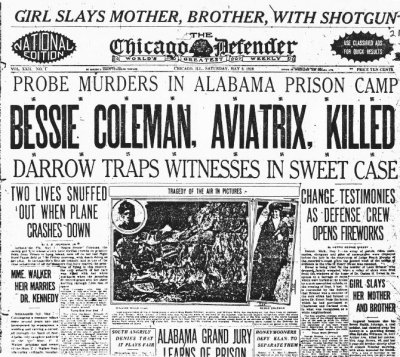
The Chicago Defender vs The Florida Times Union - Reporting on Aviatrix Bessie Coleman's Death


The Florida Times Union, the major newspaper
in Jacksonville, Florida, never mentioned 
aviatrix Bessie Coleman by name in their 1926
reporting. They reported the death of her
assistant instead. The Chicago Defender,
however, reported her death as a front
page piece. The Chicago Defender was banned
from a number of southern cities as a result
 of their inspiring articles about African Americans.

_______________________________________
____________________
_________
__


_______________________________________________


__________________________________________________________________
Florida Times Union News photograph of airplane wreck in which African American aviatrix Bessie Coleman and William D. Wills were killed - Jacksonville, Florida


_____________________________________


__________________________


             "Bessie Coleman Flying the Blues" takes a look at the times of the roaring twenties in the United States through the life of pioneering aviatrix Bessie Coleman. She was admired by the women and men of her day in aviatrix because of her death defying skills as an airshow barnstormer. She was the first American woman to receive an international pilots license. Because of her race in the Jim Crow era, Bessie had to go to France to receive training. Her influence reached beyond race and gender. She inspired Amelia Earhart who came after Bessie. Coleman died in 1926 in a plane crash one day before an airshow she was to headline in Jacksonville, Florida. Coleman's dream of opening a school inspired her followers to form the schools that trained the Tuskegee Airmen. This book is the most thorough research done into the life and circumstances of this American female pioneer in the field of aeronautics. Bessie Coleman remains a celebrated figure during Black History Month and she is hugely popular among aeronautics enthusiasts. Finally, this ebook captures race and Bessie's connection to the hugely popular Blues and Jazz music genres. 

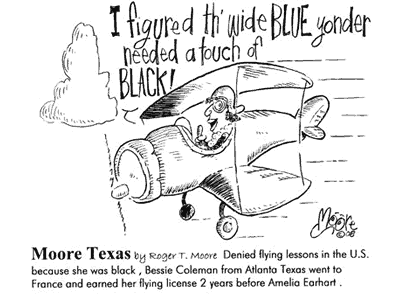
             Bessie Coleman was the first African American to earn a pilot's license. She taught herself French and moved to France in order to earn a license. Her international license came from France's well-known Caudron Brother's School of Aviation in just seven months. She specialized in aerial tricks, stunt flying and parachuting. This is how she made a living as a barnstormer around the United States and France. She remains a pioneer in the field of aviation.


Thursday, April 18, 2013

Letter to the Florida Times Union: Correct the Record on Pioneer Aviatrix Bessie Coleman


Dear Florida Times Union Editor

            This letter is a request that the Florida Times Union newspaper do a correction on an important historical figure. On April 30, 1926, female aviatrix pioneer Bessie Coleman died at the (now defunct) Paxon Airfield here in Jacksonville, Florida. When Bessie Coleman died, your publication refused to mention her by name; simply calling her “that woman.However, it did mention the name of the man who piloted the plane. Your story also falsely reported that he was teaching Bessie how to fly. The truth is, Mrs. Coleman held an international pilot’s license she earned from the most prestigious flight school in France. The young pilot was Bessie’s junior and had less flying skills.

            Bessie Coleman was immensely popular during the roaring 20s and was admired by the male and female pilots of her day. One of her admirers was Amelia Earhart. Bessie was known for breath-taking air maneuvers and highly entertaining parachute jumps.  Bessie is also the first African American female to fly an airplane. This woman’s story is important to all. The Unite States Postal Service recognized Mrs. Coleman’s achievements with a stamp in her honor.  The Norman Studios (of Laurel and Hardy fame) here in Jacksonville communicated with Bessie concerning an idea about a film based on her flying skills. She would not live to see the company make its most famous film, The Flying Ace. This film was completed and screened at the end of the same year Bessie Coleman died.

            Bessie was invited to Jacksonville by the Negro Welfare League. Thousands of people in Jacksonville were going to enjoy their May 1st sponsored airshow. However, a day before the event, Bessie was leaning over her airplane checking out the field below while her assistant piloted the plan. The plane jerked downward throwing Bessie from the plane. She fell 2,000 feet to her death. Her body was taken to the Lawton L. Pratt funeral home. There were thousands of mourners at two funerals held for her here in Jacksonville. One service was held for Bessie at the Bethel Baptist Institutional Church of Jacksonville. Minister Reverend Scott Bartley, Reverend T.H.B. Walker and Reverend John E. Ford presided over the massive funeral. A second service was held for her in the city at the St. Philips Episcopal Church on Union Street then lead by Reverend Parchment. Other funerals were held for her in Orlando and in Chicago where over 15,000 mourners filed pass her casket.

            Jacksonville is the only city relevant to this story that has not officially recognized Bessie Coleman with an honor. This town needs to know that Chicago named a major road leading to one of their major airports, Bessie Coleman Boulevard. There are streets and schools named in her honor around this country. Jacksonville has streets named after Amelia Earhart and the Wright brothers. Bessie has a closer tie to Jacksonville than either of those great aviation pioneers but has not been memorialized as they have. Such an important figure is worthy of your attention and most importantly, making the record straight. An ideal piece would be a series about Bessie Coleman explaining her heroics and the time in which she lived. The city will get to know a pioneering woman who belongs to this city because of her death here. This would be an award-winning story for a talented journalist.

                Enclosed with this correspondence is a copy of both a summary (attached) of her life, ebook and a documentary film entitled “Bessie Coleman: Flying the Blues.” I did this project several years ago while a graduate student at U.N.F. The film has run on the city’s public access channel. I will also be asking the City Council and Mayor Brown to consider honoring Bessie Coleman in some official way. Thanks again and I can be reached by email at politainment1@gmail.com or by text/call at 904-422-6078.

Sincerely,

Opio Sokoni

Bessie Coleman's Funerals In Jacksonville, Florida


           Bessie Coleman was invited to Jacksonville by the Negro Welfare League. Thousands of people in Jacksonville were going to enjoy their May 1st 1926 sponsored airshow. However, a day before the event, Bessie was leaning over her airplane checking out the field below while her assistant piloted the plan. The plane jerked downward throwing Bessie from the plane. She fell 2,000 feet to her death. Her body was taken to the Lawton L. Pratt funeral home. There were thousands of mourners at two funerals held for her here in Jacksonville. One service was held for Bessie at the Bethel Baptist Institutional Church of Jacksonville. Minister Reverend Scott Bartley, Reverend T.H.B. Walker and Reverend John E. Ford presided over the massive funeral. A second service was held for her in the city at the St. Philips Episcopal Church on Union Street then lead by Reverend Parchment. Other funerals were held for her in Orlando and in Chicago where over 15,000 mourners filed pass her casket.

See Bessie Coleman: Flying the Blues www.Poli-Tainment.com

_________________________________________________________________________


Songs Sung at Bessie Coleman's Funerals


Jesus Savior Pilot Me


I've Done My Work(Bessie's Favorite Gospel Song)


Verse 1.
I've done my work, I've sung my song,
I've done some good, I've done some wrong,
And I shall go where I belong;
The Lord has willed it so.
He knows my heart and ev'ry thought,
He knows what pain and joy I've brought;
And by His love I shall be taught
The way to Him I know.

Verse 2.
He knows my soul so weak and blind,
So full of fears of mortal mind,
And He will lead, and I shall find
The way to Him, I know.
He guides my steps, and He knows best,
He will not harm where He is blessed.
And so goodnight, I'll take my rest,
Where sweet wild roses grow.

__________________________________________________________________________


  Bethel Baptist Institutional Church of Jacksonville


--------------------------------------


 St. Philips Episcopal Church 

Fr. Hugh Chapman is the current Rector 

St. Philips Episcopal Church Record of Leadership

St. Philips Episcopal Church

____________________________________________


Rev. John E. Ford was the pastor and presided over Bessie Coleman's Funeral 


__________________________________________________________


             "Bessie Coleman Flying the Blues" takes a look at the times of the roaring twenties in the United States through the life of pioneering aviatrix Bessie Coleman. She was admired by the women and men of her day in aviatrix because of her death defying skills as an airshow barnstormer. She was the first American woman to receive an international pilots license. Because of her race in the Jim Crow era, Bessie had to go to France to receive training. Her influence reached beyond race and gender. She inspired Amelia Earhart who came after Bessie. Coleman died in 1926 in a plane crash one day before an airshow she was to headline in Jacksonville, Florida. Coleman's dream of opening a school inspired her followers to form the schools that trained the Tuskegee Airmen. This book is the most thorough research done into the life and circumstances of this American female pioneer in the field of aeronautics. Bessie Coleman remains a celebrated figure during Black History Month and she is hugely popular among aeronautics enthusiasts. Finally, this ebook captures race and Bessie's connection to the hugely popular Blues and Jazz music genres.

             Bessie Coleman was the first African American to earn a pilot's license. She taught herself French and moved to France in order to earn a license. Her international license came from France's well-known Caudron Brother's School of Aviation in just seven months. She specialized in aerial tricks, stunt flying and parachuting. This is how she made a living as a barnstormer around the United States and France. She remains a pioneer in the field of aviation.

Tuesday, April 9, 2013

Aviatrix Pioneer Bessie Coleman


 Aviatrix Pioneer Bessie Coleman 

Capturing the attention of the world with her hair-raising stunt flying, parachuting and barnstorming, Bessie Coleman also bridged a pivotal gap by becoming the first African American woman to earn a recognized pilot’s license. She was also among the first women to become a famous pilot. Amelia Earhart idolized Brave Bessie.

As she proved throughout her sky-high career, Bessie Coleman was unstoppable. When U.S. flying schools refused to allow her entry, she quickly learned French and departed for France, gaining her pilot’s license from the coveted Caudron Brother’s School of Aviation in just seven months.  Bessie’s life and career proves that determination and passion is stronger than any of society’s constraints.

The times were the roaring twenties in the United States. Pioneering aviatrix Bessie Coleman was admired by the women and men of her day in aviatrix because of the excitement she brought to the early airshows. She was the first American woman to receive an international pilot’s license and first African American to receive a pilot’s license. Her influence reached beyond race and gender. Coleman's dream of opening a school inspired her followers to form the schools that lead to the training of the famed World War II black pilots called the Tuskegee Airmen. She also inspired Amelia Earhart who came after Bessie. 

Coleman died in 1926 in a plane crash one day before an airshow she was to headline in Jacksonville, Florida. The United States Postal Service recognized Mrs. Coleman’s pioneering achievements with a stamp. Roads and schools have also been named in her honor. Bessie Coleman’s remarkable story of courage and achievement is still celebrated every February and March during Black History and Women’s History months. She is also hugely popular among aeronautics enthusiasts.

She was one of the first pioneers to break down social barriers and confront an issue that many at the time kept quiet. In addition, she was the first African American to refuse to perform if blacks were not allowed through the same entrance as Whites. Not only was it rare for a woman to become a pilot, but the fact she was an African American woman made her achievements all the more important. 

Brave Bessie Coleman died in a plane accident in Jacksonville, Florida one day before an airshow she was to headline. The city of her childhood (Waxahachie, TX) and the city she migrated to (Chicago) have both named major roads and schools in Bessie’s honor. The city of her death has streets named after Amelia Earhart and the Wright brothers. Bessie, however, who has a closer tie to Jacksonville than either of them has not been honored as such.


About the author:

Opio is a political commentator and founder of Poli-Tainment, Inc., a non-profit organization which uses various forms of entertainment to educate the public about important issues. He is also a documentary filmmaker whose subjects are media images, Hip Hop and meth addiction. Mr. Sokoni’s writings include books about the Seminole Wars, the plight of black police officers and a history about black music genres created in the United States. Opio has a BA in political science from Norfolk State University, a masters in criminal justice from the University of North Florida and a law degree from Howard University. He resides in Jacksonville, Florida.  Contact: Opio Sokoni / 904-422-6078 / politainment1@gmail.com.